
In 2026, the paradigm of enterprise defense has shifted from perimeter containment to continuous operational recovery. This guide explores how modern organizations are building a resilient Zero Trust Architecture to withstand sophisticated, multi-vector attacks. You will learn how to integrate Agentic AI security, deploy quantum-resistant algorithms, and leverage SASE (Secure Access Service Edge) to transition your infrastructure from basic threat prevention to active organizational resilience. By aligning your defense mechanisms with modern automated workflows, your security operations center can maintain business continuity even during an active, high-velocity breach.
- Resilience Over Prevention: Modern frameworks assume breach and focus on rapid containment and continuous operations.
- Agentic AI Safeguards: Securing autonomous, decision-making AI agents is now a foundational security requirement.
- Quantum Readiness: Migrating to post-quantum cryptography is critical to protecting historical and future data.
How Does Zero Trust Architecture Drive Cyber Resilience in 2026?
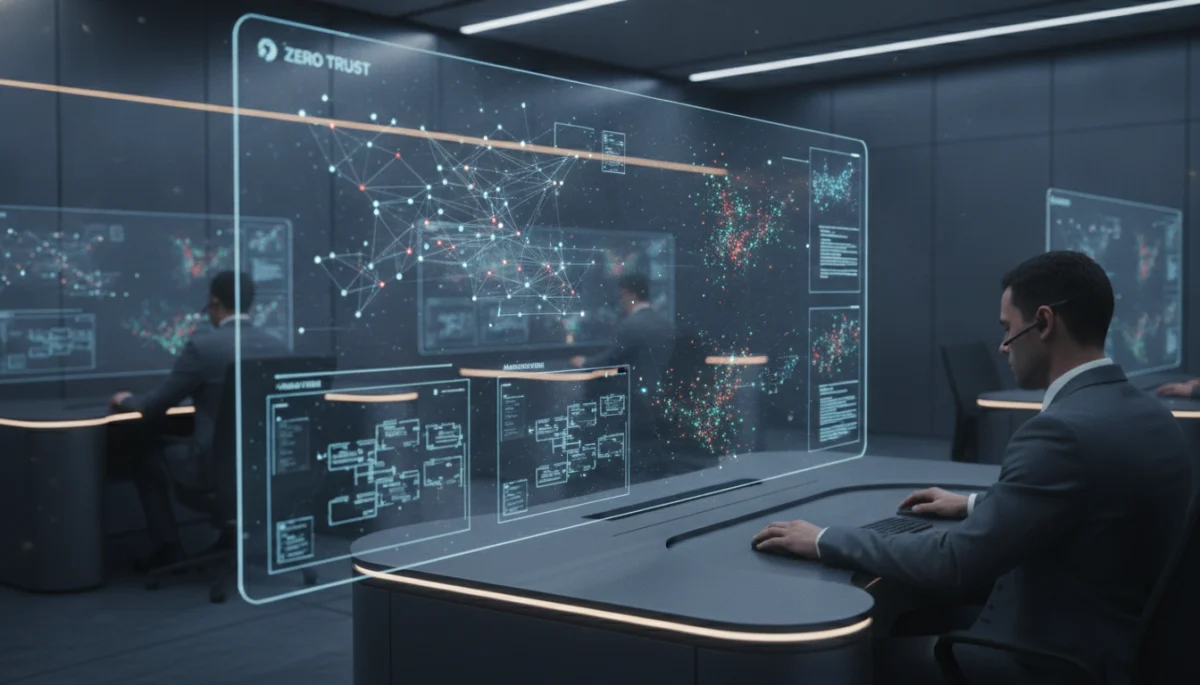
Traditional security models relied heavily on static firewalls and virtual private networks to protect corporate perimeters. Today, the widespread adoption of hybrid workforces and distributed cloud environments has rendered the traditional perimeter obsolete. Zero Trust Architecture addresses this shift by enforcing a strict policy of “never trust, always verify” across every user, device, and transaction.
To achieve true resilience, organizations are unifying their network and security architectures through SASE (Secure Access Service Edge). SASE combines software-defined wide area networking (SD-WAN) with cloud-delivered security services, ensuring that security policies are applied dynamically at the edge. This integration minimizes latency, simplifies policy management, and ensures that security controls scale seamlessly alongside your cloud infrastructure.
By implementing micro-segmentation within a SASE framework, security teams can isolate compromised assets instantly. This containment strategy prevents lateral movement across the network, limiting the blast radius of a security incident. Consequently, critical business operations can continue uninterrupted while isolated threats are actively remediated.
How Do We Secure Autonomous Workflows with Agentic AI Security?
The rapid proliferation of autonomous AI agents has introduced a complex, highly dynamic attack surface. Unlike traditional software, agentic AI systems make independent decisions, execute multi-step workflows, and interact directly with enterprise APIs. Securing these autonomous systems requires specialized Agentic AI security protocols designed to monitor and govern machine-to-machine interactions.
Security teams are deploying specialized guardrails to prevent prompt injection, data exfiltration, and unauthorized privilege escalation within AI workflows. These guardrails continuously validate the inputs, outputs, and intermediate states of autonomous agents. By establishing strict behavioral baselines, organizations can detect when an agent has been compromised or is behaving erratically.
Furthermore, AI-driven threat hunting has become essential for identifying subtle anomalies in agent behavior. Automated threat hunting tools continuously analyze massive datasets, identifying hidden patterns that suggest an adversary is tampering with decision-making algorithms. This proactive approach allows organizations to neutralize sophisticated AI-targeted threats before they impact downstream business operations.
Why Must Organizations Adopt NIST Quantum-Resistant Algorithms Now?
The threat of quantum computing to classical encryption is no longer a distant concern. Bad actors are actively executing “harvest now, decrypt later” campaigns, intercepting encrypted enterprise data with the intent of decrypting it once cryptanalytically relevant quantum computers become available. To mitigate this systemic risk, forward-looking enterprises are transitioning to post-quantum cryptography.
Integrating the newly finalized NIST post-quantum cryptographic standards into your data protection strategy is a critical step toward long-term resilience. These mathematical algorithms are specifically designed to withstand attacks from both classical and quantum computers, safeguarding sensitive intellectual property and customer data. Upgrading your cryptographic inventory ensures that your archived data remains secure against future decryption capabilities.
This transition requires comprehensive cryptographic agility. Organizations must map their existing cryptographic assets, identify vulnerable legacy algorithms, and establish automated pipelines to update encryption keys and protocols. By building cryptographic agility into your architecture, you can adapt to evolving cryptographic standards without disrupting daily operations.
What Does an Active Cyber Resilience Framework Look Like in Practice?
Real-world implementation data highlights the measurable benefits of transitioning from static prevention to active resilience. For instance, global financial institutions adopting integrated ZTA and SASE frameworks have reported a 70% reduction in the lateral spread of malware. By isolating compromised endpoints within milliseconds, these organizations maintain operational uptime during active security events.
In another case, a major logistics provider utilized AI-driven threat hunting to identify an ongoing API abuse campaign targeting their automated supply chain agents. The threat hunting system detected anomalous API calls that bypassed traditional signature-based detection. By automatically adjusting access permissions and isolating the affected agents, the organization averted a potential multi-million dollar supply chain disruption.
These examples demonstrate that modern resilience is not achieved through a single security tool. Instead, it relies on a cohesive framework that combines continuous identity verification, automated threat hunting, and robust cryptographic standards to protect the entire enterprise ecosystem.
Navigating the complex threat landscape of 2026 requires an immediate, structured audit of your existing identity boundaries and cryptographic assets. Begin by mapping your autonomous AI agent workflows and transitioning legacy remote access systems to a fully integrated SASE model. Embracing this resilient posture ensures that when a security incident occurs, your business operations remain uninterrupted, secure, and fully operational.