
In 2026, the corporate perimeter has completely dissolved, forcing a paradigm shift from threat prevention to continuous cyber resilience. In this deep dive into a modern cybersecurity framework, you will learn how leading enterprises are integrating Zero Trust Architecture with agentic AI security and post-quantum cryptography to survive inevitable breaches. By shifting the focus from keeping attackers out to minimizing blast radiuses and maintaining operational continuity during an active exploit, organizations can achieve true digital durability.
Key Takeaways:
- Resilience Over Prevention: Modern frameworks assume breach and focus on rapid containment and continuous operations.
- Agentic AI and SASE Convergence: Autonomous security agents integrated into SASE architectures enable real-time, decentralized threat mitigation.
- Quantum Readiness: Transitioning to NIST-approved post-quantum algorithms is now a critical priority for securing legacy data.
How Does Zero Trust Architecture Enable Cyber Resilience in 2026?
The core philosophy of Zero Trust has transitioned from a static access control model to an active, identity-centric resilience framework. By implementing continuous authentication and granular microsegmentation, organizations ensure that a compromise in one department does not lead to a systemic failure. This evolution relies heavily on the convergence of Zero Trust Architecture with SASE (Secure Access Service Edge) platforms.
In practice, SASE coordinates security policies across distributed clouds, remote workforces, and edge devices. Instead of relying on traditional firewalls, security teams use software-defined perimeters to enforce context-aware access policies. If an endpoint is compromised, the SASE controller instantly revokes its access tokens, isolating the threat before it can propagate laterally through the enterprise network.
What Role Does Agentic AI Play in Real-Time Threat Mitigation?
Traditional security orchestration, automation, and response (SOAR) platforms often struggle with the speed of modern polymorphic malware. To counter this, organizations are deploying Agentic AI security. Unlike passive machine learning models that merely flag anomalies, agentic AI systems are autonomous goal-oriented entities capable of executing complex containment strategies without human intervention.
These autonomous agents operate directly within the enterprise’s AI-driven threat hunting pipeline. They continuously analyze telemetry from endpoints, cloud workloads, and identity providers. When an anomaly is detected, the agentic AI can dynamically rewrite firewall rules, quarantine compromised containers, and initiate forensic collection in milliseconds. This rapid response reduces the dwell time of attackers from days to fractions of a second.
Why Are NIST Quantum-Resistant Algorithms Becoming Mandatory?
As quantum computing capabilities advance, the cryptographic foundations of modern digital infrastructure face unprecedented risks. Threat actors are actively engaging in “harvest now, decrypt later” campaigns, capturing encrypted enterprise data with the intent of decrypting it once cryptanalytically relevant quantum computers emerge. To mitigate this systemic risk, the transition to NIST Quantum-Resistant Algorithms standards has become a primary compliance and security requirement in 2026.
Integrating these post-quantum algorithms into existing Zero Trust frameworks requires a comprehensive cryptographic inventory. Organizations must identify and replace vulnerable public-key cryptography—such as RSA and ECC—with lattice-based algorithms like ML-KEM and ML-DSA. This migration ensures that long-lived data, automated machine-to-machine communications, and firmware signatures remain secure against future quantum threats.
How Are Enterprises Implementing These Frameworks Successfully?
Real-world data shows that organizations prioritizing cyber resilience over pure prevention recover from security incidents up to 70% faster. For example, modern financial institutions utilizing decentralized identity verification coupled with continuous diagnostics and mitigation (CDM) workflows report near-zero lateral movement during ransomware simulations. Rather than aiming for an impossible 100% block rate, these firms focus on minimizing the time to detect, contain, and recover.
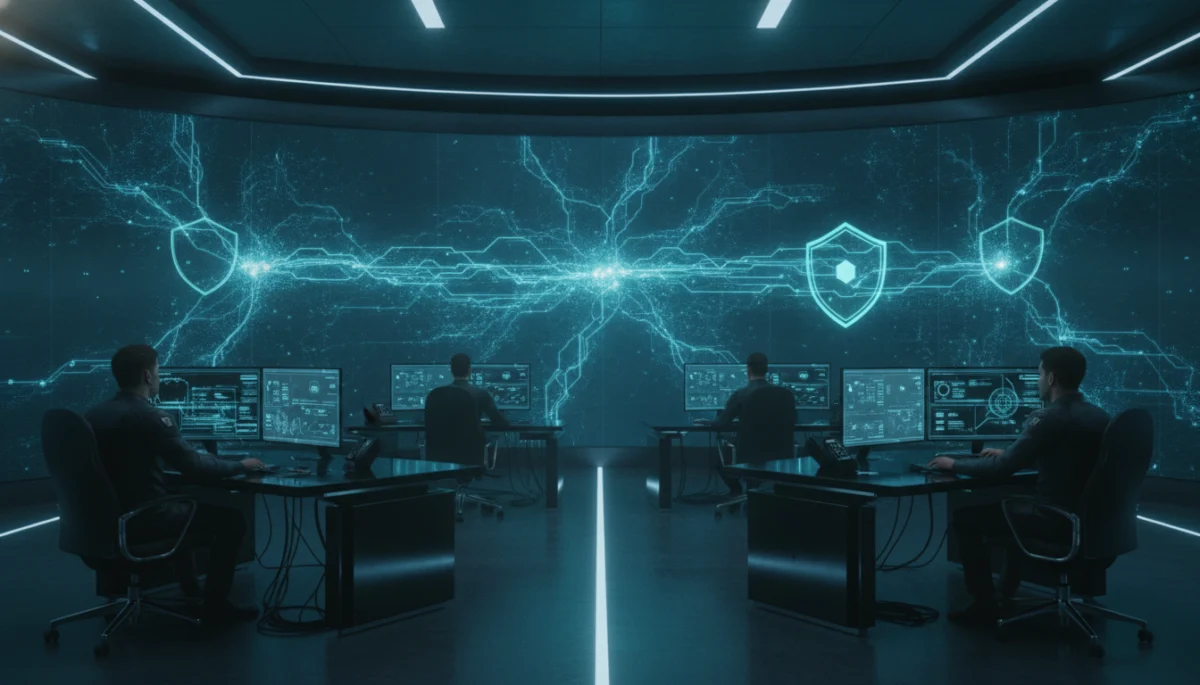
Furthermore, security leaders are restructuring their Security Operations Centers (SOCs) to support human-machine collaboration. Human analysts no longer spend their shifts triaging low-level alerts; instead, they oversee the guardrails governing autonomous agentic AI systems, ensuring that automated mitigation actions align with broader business continuity objectives.
To begin building a resilient security posture today, initiate a comprehensive audit of your organization’s cryptographic dependencies and map out your SASE integration roadmap. Transitioning to a resilient architecture is an iterative journey that starts with securing your most critical identity vectors and continuously validating your automated containment policies.