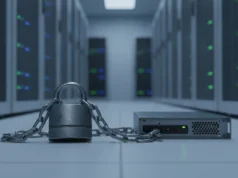


In 2026, cybersecurity landscapes are dominated by highly sophisticated, speed-oriented threats. To protect critical infrastructure, security professionals must understand how modern threat actors evade detection. In this article, you will learn how to defend your organization against intermittent encryption—a rapid ransomware tactic designed to bypass traditional security controls—and why combining offline, immutable backups with robust recovery protocols is the only definitive way to secure your data.
Key Takeaways:
- Intermittent encryption evades EDR/XDR systems by encrypting only portions of files, avoiding high-entropy detection triggers.
- Double extortion tactics and cloud-based ransomware execute in minutes, rendering manual security intervention obsolete.
- Offline, immutable backups serve as the ultimate defense, ensuring data integrity even when administrative credentials are compromised.
How Does Intermittent Encryption Bypass Modern EDR/XDR Systems?
Traditional ransomware encrypts entire files, a process that generates high CPU usage and significant file-system activity. This intense activity immediately alerts Endpoint Detection and Response (EDR) and Extended Detection and Response (XDR) systems. To counter these defenses, modern attackers utilize intermittent encryption, a technique that encrypts only alternating blocks of data within a file (such as every tenth block or random segments).
By leaving portions of the file unencrypted, the ransomware maintains a low computational profile. The file’s overall structure remains superficially recognizable to basic heuristic analysis, resulting in an effective EDR/XDR bypass. Because the security agents do not register the high-entropy anomalies typically associated with bulk encryption, the malware can quietly compromise entire networks without triggering automated isolation protocols.
Why Speed of Execution Redefines the Ransomware Threat Landscape
The operational velocity of modern malware has accelerated dramatically. Automated scripts and cloud-based ransomware can spread laterally and encrypt multi-terabyte environments within minutes of initial access. This rapid execution window leaves security operations center (SOC) analysts with virtually zero time to manually triage, contain, and remediate the threat before catastrophic data loss occurs.
Furthermore, attackers pair this speed with double extortion tactics. Before initiating the encryption sequence, threat actors silently exfiltrate sensitive corporate information to cloud repositories. They then threaten to publish this stolen data on public leak sites if the ransom is not paid. When encryption and exfiltration happen concurrently at machine speed, reactive perimeter defenses are no longer sufficient to protect corporate assets.
Real-World Impact and the Evolution of Ransomware Tactics
Security researchers have observed a sharp rise in ransomware strains, such as LockBit and BlackCat variants, adopting partial encryption methodologies to accelerate their payloads. Industry analysis shows that encrypting just 50% of a file’s contents can render it completely unusable while cutting the execution time in half. This optimization allows threat actors to maximize damage before defensive measures can deploy.
According to the NIST Special Publication 800-209 guidelines for storage security, modern data protection strategies must assume that primary storage networks will eventually be compromised. As ransomware actively targets online backup repositories and cloud-based hypervisors, organizations must transition from reactive monitoring to proactive, architectural resilience.
Why Immutable Backups Are Your Only Absolute Defense in 2026
When EDR/XDR bypass occurs and active directory credentials are compromised, traditional network-attached backups are often the first targets deleted by adversaries. This vulnerability makes immutable backups the cornerstone of modern disaster recovery. Immutability ensures that once backup data is written, it cannot be altered, overwritten, or deleted by any user—including administrators—for a predetermined retention period.
To withstand sophisticated cloud-based ransomware, these immutable repositories must be paired with offline or logically air-gapped architectures. An offline backup remains entirely disconnected from the production network, preventing malware from traversing the network to reach the backup files. Even if attackers gain full administrative control over your cloud infrastructure, they cannot modify or delete physically isolated or write-once-read-many (WORM) protected data assets.
To secure your enterprise against these evolving threats, begin by conducting a comprehensive audit of your current backup architecture. Transition your recovery strategy to prioritize automated, offline, and immutable storage solutions, and regularly test your restoration speeds under simulated network-wide compromise scenarios to guarantee operational resilience.