
Mobile security in 2026 faces unprecedented threats from sophisticated zero-click exploits and stealthy Pegasus-style spyware that compromise devices without any user interaction. In this guide, you will learn how modern iOS and Android operating systems are vulnerable to these advanced vectors, and how the latest mobile hardware security modules (HSM) are evolving to isolate cryptographic keys and block unauthorized memory access. Understanding these hardware-level defenses is critical for safeguarding enterprise data against emerging risks like SIM swapping, malicious SDKs, and vulnerabilities within 5G network slicing security.
- Zero-Click Vulnerabilities: Attacks exploit media parsing libraries and baseband processors to bypass traditional OS sandboxing without user interaction.
- Hardware-Level Isolation: 2026 HSMs utilize physical memory encryption and hardware-enforced virtualization to nullify OS-level compromises.
- Network and Supply Chain Protections: Evolving hardware micro-segmentation mitigates risks from malicious SDKs and 5G network slicing misconfigurations.
How Do Zero-Click Exploits and Pegasus-Style Spyware Bypass Mobile OS Defenses?
Zero-click exploits represent the pinnacle of mobile threat sophistication because they require zero user interaction to execute malicious code. These attacks typically target vulnerabilities in system applications that process untrusted data automatically, such as iMessage, WhatsApp, or SMS MMS parsers. By exploiting memory corruption vulnerabilities in graphic processing or font-rendering libraries, attackers can achieve remote code execution (RCE) silently.
Once inside, Pegasus-style spyware escalates privileges by exploiting kernel-level vulnerabilities in iOS and Android. Traditional software sandboxing fails here because the operating system kernel itself becomes compromised. Once the kernel is controlled, the spyware can access microphone feeds, encrypted chat databases, GPS locations, and camera hardware without triggering any system alerts.
Why Malicious SDKs and 5G Network Slicing Security Demand Hardware-Level Trust
The threat landscape extends beyond remote exploits into the software supply chain and carrier networks. Malicious SDKs embedded in legitimate-looking third-party applications bypass app store vetting by delaying their malicious payloads or downloading encrypted assets at runtime. Once activated, these SDKs attempt to harvest device identifiers, intercept SMS verification codes, or facilitate SIM swapping attacks by spoofing device telemetry to cellular carriers.
Concurrently, the widespread adoption of 5G enterprise networks introduces complex architectures. While 5G network slicing security allows operators to partition virtual networks for specific enterprise use cases, misconfigured slices can leak data between logical networks. If a device is compromised via a malicious SDK, it can attempt to cross-talk between secure and insecure slices, exposing sensitive corporate backends to lateral movement.
How Are 2026 Mobile Hardware Security Modules Evolving to Block Attacks?
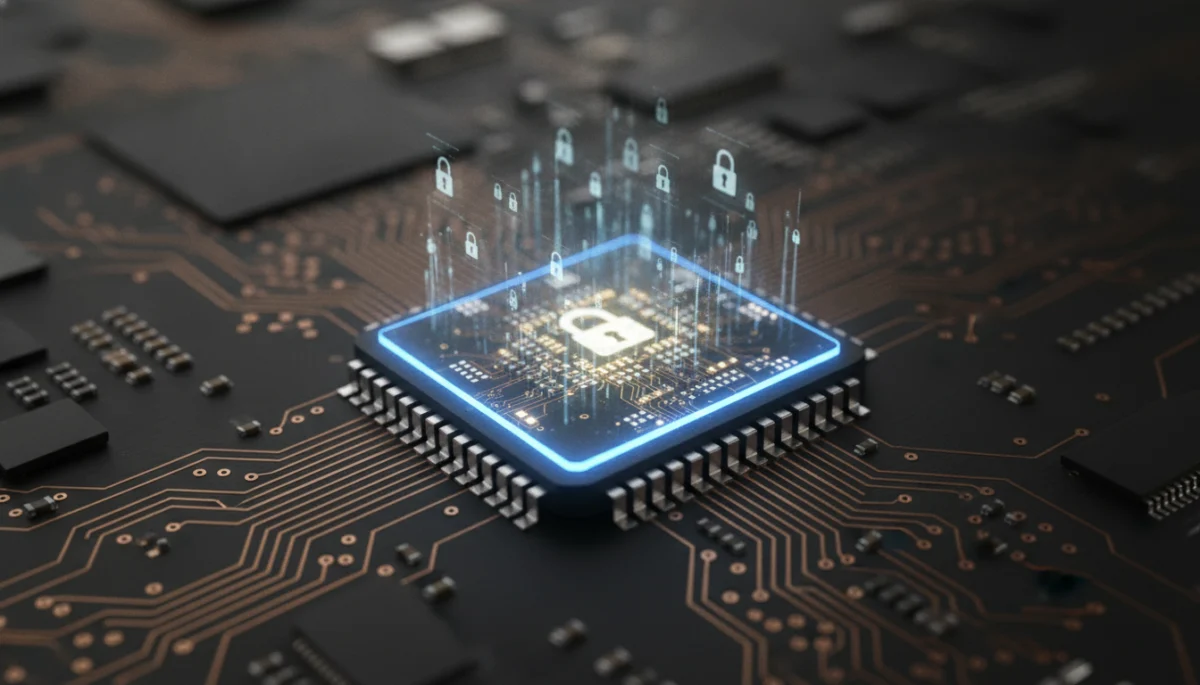
To counter these deep-system compromises, hardware manufacturers have redesigned mobile hardware security modules (HSM), such as Apple’s Secure Enclave and Android’s StrongBox, to operate under a zero-trust hardware paradigm. In 2026, these modules no longer just store cryptographic keys; they actively monitor and validate runtime system integrity.
Modern HSMs leverage Hardware-Enforced Memory Tagging Extensions (MTE) and isolated execution environments. According to the NIST Mobile Device Security guidelines, establishing a hardware-based root of trust is fundamental to ensuring that the operating system has not been modified or tampered with during boot or runtime. If a zero-click exploit attempts to overwrite kernel memory, the HSM detects the tag mismatch at the hardware level and immediately halts the affected processor core, neutralizing the spyware before it can execute.
How HSMs Mitigate SIM Swapping and Identity Theft
SIM swapping relies on manipulating carrier customer service or exploiting SS7/Diameter signaling vulnerabilities to clone a target’s phone number. To combat this, 2026 HSMs bind multi-factor authentication (MFA) directly to physical hardware using FIDO2-compliant cryptographic keys. Because the private keys are generated inside the HSM and can never be exported or cloned—even by a compromised operating system—an attacker who successfully swaps a SIM card still cannot bypass hardware-bound MFA prompts.
Real-World Threat Intelligence and Vulnerability Data
Data from cybersecurity research groups highlights the urgency of these hardware upgrades. Analysis of zero-day vulnerabilities discovered in recent years reveals that over 70% of exploited mobile vulnerabilities involved memory safety issues. By moving memory validation and cryptographic verification out of the main CPU and into dedicated, physically isolated HSM silicon, hardware vendors have reduced the attack surface of critical cryptographic operations to near zero. This physical separation ensures that even if the primary OS kernel is fully compromised by Pegasus-style spyware, the attacker cannot extract corporate credentials, user passwords, or biometric templates.
How to Secure Your Mobile Infrastructure Against Next-Gen Threats
To leverage these 2026 hardware-level defenses effectively, organizations must transition from legacy mobile device management to hardware-attested security postures. Ensure that your enterprise applications require hardware-backed key storage and enforce device attestation APIs, which query the HSM directly to verify OS integrity before granting access to corporate networks.
Additionally, configure your mobile fleet to disable 2G and legacy cellular protocols, which are highly susceptible to IMSI-catcher interception, and enforce strict 5G SA (Standalone) network profiles that utilize encrypted subscription identifiers (SUCI). By combining robust hardware-attested policies with continuous device health monitoring, you can neutralize the threat of zero-click exploits and keep your organization’s data secure.</