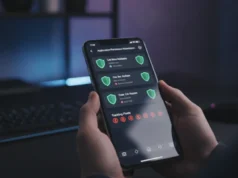


Your smartphone is a goldmine of personal data, making it the primary target for invasive surveillance. In this guide, you will learn how to identify and block commercial spyware and stalkerware, understand the legal landscape of 2026, and use advanced tools to eliminate hidden tracking pixels. By mastering OS-level permission monitoring and utilizing privacy-preserving telemetry, you can safeguard your digital footprint against aggressive monitoring tactics.
- Draw the Line: Understand how aggressive adware crosses into illicit spyware when consent is bypassed.
- Leverage 2026 Tech: Use automated tools to strip tracking pixels and intercept telemetry data in real-time.
- Enforce OS Security: Maximize OS-level permission monitoring to block unauthorized camera, mic, and location access.
Where is the line between aggressive adware and commercial spyware?
Modern software monetization has blurred the boundaries of user consent. Aggressive adware typically bombards your screen with intrusive advertisements and tracks your browsing habits to serve targeted campaigns. While highly annoying, it generally operates within legal frameworks, disclosing its actions inside dense Terms of Service agreements that users rarely read.
Conversely, commercial spyware and stalkerware operate in complete secrecy. These malicious programs run silently in the background without user consent, recording keystrokes, intercepting text messages, harvesting GPS coordinates, and even activating cameras or microphones. The defining boundary is transparency and control: if a program actively conceals its presence and transmits sensitive personal data to a third party without explicit, ongoing consent, it has crossed the line from aggressive marketing into covert surveillance.
How do new 2026 privacy laws protect your personal data?
The legal landscape has shifted dramatically to combat unauthorized tracking. In 2026, updated regulatory frameworks impose strict penalties on developers who deploy deceptive tracking mechanisms. These laws mandate that any application collecting telemetry data must use decentralized, privacy-preserving telemetry protocols, ensuring that individual user identities remain anonymous.
Furthermore, regulatory bodies have intensified their crackdowns on the developers of surveillance tools. You can explore the Federal Trade Commission guidelines on consumer privacy and spyware to see how regulatory action is banning companies that facilitate covert stalking. These federal protections make it illegal to market software designed primarily for stealth monitoring, forcing a massive cleanup of app marketplaces globally.
What tools automatically strip tracking data from your apps?
While legal protections provide a safety net, real-time defense requires active technological intervention. Modern privacy suites in 2026 now feature automated tools designed to intercept and neutralize tracking vectors before they reach external servers.
Neutralizing hidden tracking pixels
Hidden tracking pixels are single-pixel transparent images embedded in emails and mobile applications. When loaded, they silently transmit your IP address, device model, and the exact time you opened the content. To counter this, 2026 email clients and privacy-focused browsers utilize local proxy servers to pre-render images, stripping out tracking parameters and preventing direct connections to data-harvesting servers.
Deploying OS-level permission monitoring
Both Android and iOS have expanded their security architectures to include real-time OS-level permission monitoring. These system-level dashboards alert you instantly when an app attempts to access your location, clipboard, or sensor data in the background. By auditing these logs weekly, you can identify which apps are abusing their privileges and revoke access permanently.
Expert-backed context: The scale of the spyware threat
The threat of silent surveillance is not merely theoretical. Cybersecurity research collectives have documented a significant rise in “grayware”—applications that do not contain outright malware but violate privacy norms by selling location data to brokers. According to recent threat intelligence reports, over 40% of free mobile applications contain embedded SDKs designed to bypass standard browser protections, relying instead on direct device telemetry to build highly invasive consumer profiles.
To secure your devices today, begin by auditing your active applications using your device’s built-in privacy dashboard. Enable automatic network-level ad blocking through secure DNS providers, and transition to communication platforms that utilize end-to-end encryption with zero-knowledge architecture. Taking these proactive steps ensures your personal data remains entirely under your control, rendering aggressive tracking mechanisms useless.