

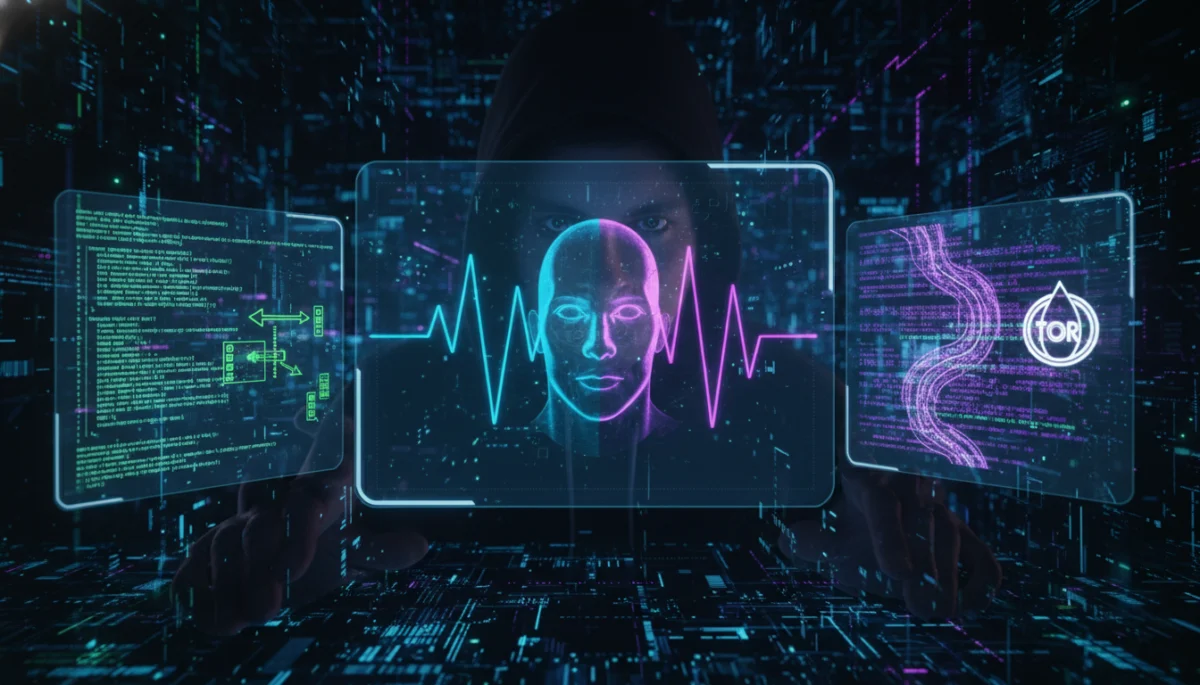
The contemporary cyber threat landscape is rapidly transforming, moving beyond rudimentary phishing and opportunistic malware. We are witnessing the emergence of sophisticated cybercriminal syndicates employing a converged methodology that integrates advanced social engineering, AI-driven deception, professionalized ransomware operations, and pervasive API exploitation. This analysis delves into a recent exploit chain illustrating this evolution, highlighting the technical intricacies and formidable legal/technical hurdles in tracing these elusive actors.
The Exploit Chain: A Converged Attack Methodology
The modern cyberattack often begins not with a single vulnerability, but with a meticulously orchestrated, multi-stage campaign leveraging diverse vectors. This sophisticated approach reflects a professionalization within the cybercriminal underworld, mimicking legitimate business models in its operational efficiency and specialization.
Social Engineering 2.0: Deepfake Voice Cloning and Hyper-Personalized Pretexting
The foundation of many advanced breaches is often a human element, now amplified by artificial intelligence. Social Engineering 2.0 transcends generic phishing; it involves highly targeted, data-rich pretexting. Cybercriminal syndicates meticulously gather Open-Source Intelligence (OSINT) from public profiles, corporate websites, and prior data breaches (often sourced from the Dark Web) to build comprehensive profiles of targets. This data enables them to craft incredibly convincing narratives.
- Deepfake Voice Cloning Fraud: This is a critical component. Leveraging publicly available audio samples (e.g., conference recordings, social media videos), threat actors employ sophisticated text-to-speech (TTS) and voice cloning AI models (e.g., Tacotron 2, VALL-E) to synthesize highly realistic voices of executives or key personnel. These deepfake voices are then used in Business Email Compromise (BEC) 3.0 scenarios, impersonating a CEO in a phone call to a finance department for urgent wire transfers, or a CISO requesting elevated access. The psychological impact and bypass of traditional voice-based authentication mechanisms make this an exceptionally potent vector.
- Multi-Vector Pretexting: The deepfake call is often preceded by a series of targeted emails or messages, establishing a sense of urgency and legitimacy. This multi-channel approach significantly increases the success rate, as the target has already been softened by a seemingly legitimate digital communication before receiving the convincing voice call.
Ransomware-as-a-Service (RaaS) Ecosystems and Initial Access Brokers (IABs)
Initial access is often gained through a separate, highly specialized arm of the cybercriminal syndicate: Initial Access Brokers (IABs). These entities specialize in compromising networks and selling validated access to other criminal groups, including RaaS affiliates.
- Dark Web Data Leaks as Fuel: IABs frequently leverage credentials exposed in Dark Web data leaks. These leaks, often from prior large-scale breaches, provide a treasure trove of valid usernames and passwords for VPNs, RDPs, and enterprise applications. Automated credential stuffing attacks against these exposed assets are commonplace, providing initial footholds.
- Professionalized RaaS Operations: Once initial access is secured, it’s often sold to RaaS affiliates. The RaaS model operates like a legitimate SaaS business, offering ransomware variants, C2 infrastructure, technical support, and even negotiation services. This professionalization lowers the barrier to entry for less sophisticated actors while increasing the overall volume and sophistication of attacks. The purchased access allows RaaS affiliates to deploy their payloads, often after extensive lateral movement and privilege escalation.
API Exploitation: The New Perimeter Bypass
With the proliferation of cloud services and microservices architectures, APIs have become critical attack surfaces. Cybercriminal syndicates are increasingly targeting misconfigured or vulnerable APIs as a primary means of bypassing traditional network perimeter defenses.
- Bypassing Traditional Security: APIs often sit outside the purview of traditional network firewalls and intrusion detection systems. Vulnerabilities such as Broken Object Level Authorization (BOLA), Excessive Data Exposure, or Security Misconfiguration (OWASP API Security Top 10) allow attackers to access, modify, or exfiltrate sensitive data directly from backend systems.
- Automated Reconnaissance and Exploitation: Sophisticated attackers utilize automated tools to enumerate API endpoints, discover hidden functionalities, and exploit known vulnerabilities at scale. This can lead to mass data exfiltration, unauthorized account creation, or even remote code execution, providing a persistent backdoor into an organization’s most critical data and services. Stolen credentials from Dark Web leaks are frequently tested against API authentication endpoints, further blurring the lines between initial access and deeper penetration.
Practical Applications and Advanced Defensive Strategies
Countering this converged threat requires a multi-layered, adaptive defense strategy:
- AI-Driven Anomaly Detection: Implement AI/ML-powered behavioral analytics for network traffic, user behavior (UEBA), and API interactions. Look for deviations in voice patterns, unusual access times, or atypical API call sequences that could indicate deepfake activity or API exploitation.
- Enhanced API Security Gateways: Deploy robust API Security Gateways with capabilities beyond basic rate limiting. These should include schema validation, granular access control, real-time threat detection (e.g., OWASP API Top 10 rule sets), and behavioral analytics specific to API usage.
- Immutable Logging and Comprehensive Telemetry: Ensure all API interactions, user authentications, and network flows are logged immutably and fed into a centralized SIEM/SOAR platform. This provides the forensic data necessary to trace complex exploit chains.
- Advanced Security Awareness Training: Move beyond generic phishing tests. Conduct sophisticated social engineering simulations that incorporate deepfake audio and multi-vector pretexting. Educate employees on the nuances of AI-generated deception and the importance of out-of-band verification for sensitive requests.
- Zero Trust Architecture: Implement Zero Trust principles across the entire enterprise, assuming breach and requiring continuous verification for every user, device, and API call, regardless of location.
Legal and Technical Hurdles in Tracking Actors
Tracing these cybercriminal syndicates presents an almost insurmountable challenge for law enforcement and cybersecurity professionals alike:
- Jurisdictional Arbitrage: Actors often operate from jurisdictions with weak cybercrime laws or non-existent extradition treaties, effectively creating safe havens.
- Anonymity Networks and Cryptocurrencies: The pervasive use of TOR, VPNs, encrypted communications, and privacy-focused cryptocurrencies (e.g., Monero) makes IP tracing and financial transaction tracking exceedingly difficult.
- Fragmented Digital Footprints: Threat actors meticulously compartmentalize their operations, using different infrastructure, identities, and tools for each stage of an attack, making it challenging to link various components to a single syndicate.
- Attribution Challenges: The sophisticated nature of deepfakes and the availability of open-source tools mean that attributing a specific attack to a particular group or individual with high confidence is often impossible, frustrating prosecution efforts.
- Scale and Speed: The automated nature of API exploitation and the rapid deployment capabilities of RaaS groups mean attacks can occur and conclude before effective countermeasures or tracing efforts can be mounted.
The convergence of AI-driven social engineering, professionalized RaaS, and pervasive API exploitation marks a new era in cyber warfare. As these syndicates continue to mature, leveraging cutting-edge technology and a global, distributed operational model, the traditional paradigms of defense and attribution are rapidly becoming obsolete. The future will demand not just technological vigilance, but a radical re-evaluation of international cooperation, legal frameworks, and the very nature of digital trust to effectively counter these evolving, elusive threats. The question is no longer if an organization will be targeted, but how resilient its defenses are against an adversary that increasingly mimics legitimate enterprise in its structure and efficiency, yet wields the power of AI to erode the very fabric of human and digital trust.





[…] landscape of cybercrime has evolved beyond opportunistic attacks into a sophisticated, interconnected ecosystem driven by […]