

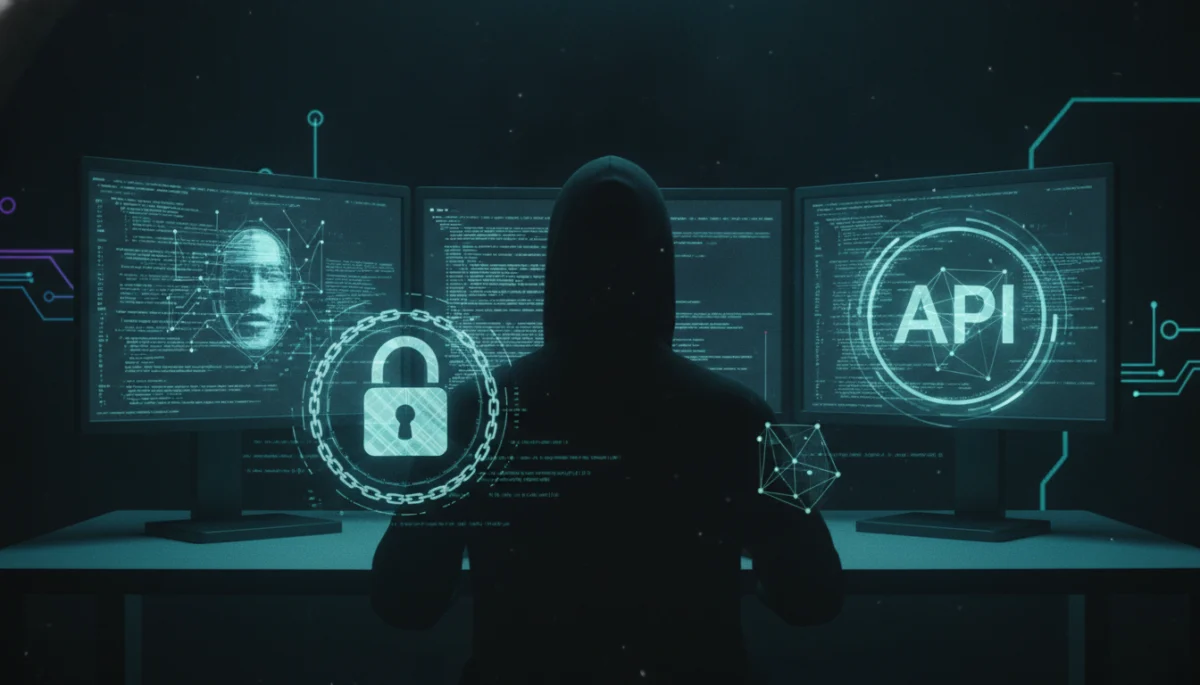
The cyber threat landscape in 2026 is defined by a sophisticated new wave of attacks, blending advanced social engineering with technical exploits to create highly effective fraud campaigns. This report delves into a recent methodology employed by cybercriminal syndicates, detailing an exploit chain that leverages Social Engineering 2.0
, deepfake voice cloning fraud
, Ransomware-as-a-Service (RaaS)
, Dark Web data leaks
, and API exploitation
. Understanding this complex interplay is crucial for modern defense strategies. You will learn about the precise steps these actors take, and the significant legal and technical hurdles that complicate tracking and attribution.
Key Takeaways
- Cybercriminal syndicates are now combining sophisticated deepfake social engineering with technical exploits like API manipulation.
- Initial access often stems from credentials obtained via Dark Web data leaks, amplified by targeted spear-phishing.
- Ransomware-as-a-Service (RaaS) models provide scalable attack infrastructure, making attribution difficult.
- Tracking these threat actors faces significant challenges due to obfuscation, cross-border jurisdiction, and fragmented legal frameworks.
What Does the New Hybrid Cyberattack Methodology Look Like?
The initial phase of this methodology relies heavily on Social Engineering 2.0
, which integrates advanced psychological manipulation with cutting-edge technology. Threat actors leverage data from extensive Dark Web data leaks
to craft highly personalized spear-phishing campaigns. This data often includes sensitive corporate information, employee hierarchies, and even personal details, making the phishing attempts incredibly convincing.
A critical component of this social engineering is deepfake voice cloning fraud
. Attackers synthesize the voices of executives or key personnel, often gleaned from public recordings or compromised internal communications. These deepfake calls are then used to authorize fraudulent transactions, request sensitive data, or trick employees into granting initial system access, bypassing traditional multi-factor authentication methods.
Once initial access is gained, often through stolen credentials or manipulated employees, the focus shifts to internal network reconnaissance and privilege escalation. Cybercriminal syndicates exploit misconfigured or vulnerable internal APIs to move laterally within the network, exfiltrate data, or establish persistent backdoors. This API exploitation
allows them to bypass endpoint detection and response (EDR) systems that might be monitoring traditional user activity.
How Do Ransomware-as-a-Service (RaaS) Syndicates Leverage This?
The operational framework for these attacks is frequently provided by Ransomware-as-a-Service (RaaS)
syndicates. These groups offer pre-built ransomware kits, infrastructure, and even technical support to affiliates, democratizing access to powerful attack tools. The hybrid methodology outlined above serves as a highly effective initial access broker for RaaS affiliates, enabling them to penetrate target networks with greater success and speed.
After gaining deep network access and identifying critical systems or valuable data, RaaS affiliates deploy their ransomware payload. This often targets essential business operations, supply chain components, or intellectual property. The combination of sophisticated social engineering and RaaS significantly increases the likelihood of a successful and impactful breach, making recovery complex and costly.
The prevalence of deepfake technology in social engineering has surged, enabling more convincing and targeted attacks. According to recent advisories, threat actors are continuously refining their use of AI to generate increasingly realistic deepfakes, posing a significant challenge to organizational security protocols. For more insights into these evolving threats, refer to CISA’s guidance on deepfake-enabled malicious cyber activity.
What Are the Technical Hurdles in Tracking These Actors?
Tracking the cybercriminal syndicates behind these sophisticated attacks presents formidable technical challenges. Threat actors employ advanced obfuscation techniques, including nested VPNs, Tor networks, and cryptocurrency mixers, to anonymize their digital footprints. This makes tracing command-and-control infrastructure and financial transactions extremely difficult for investigators.
The RaaS model itself adds another layer of complexity to attribution. The initial access brokers, ransomware developers, and payment processors are often distinct entities operating across different jurisdictions. This fractured ecosystem makes it challenging to pinpoint a single responsible party or even a cohesive group, as evidence trails frequently lead to dead ends or unrelated entities.
Furthermore, the rapid evolution of exploit techniques, including zero-day vulnerabilities and novel API exploitation
methods, means that forensic tools and methodologies are constantly playing catch-up. Digital evidence, such as logs and network traffic, can be intentionally corrupted, deleted, or stored in jurisdictions with uncooperative legal frameworks, further impeding investigations.
What Legal and Policy Challenges Impede Attribution?
Beyond technical hurdles, legal and policy complexities significantly impede the tracking and prosecution of these transnational cybercriminal syndicates. International cooperation is often hampered by differing legal standards, data privacy laws, and political considerations. Extradition treaties may not cover cybercrimes effectively, or countries may lack the resources or political will to assist in investigations.
The speed at which cybercrimes occur far outpaces the traditional legal processes of evidence sharing, warrant requests, and judicial review across borders. This asymmetry allows threat actors to operate with a degree of impunity, moving funds and data rapidly before legal systems can respond. The lack of a unified global legal framework for cybercrime attribution creates significant jurisdictional vacuums.
Additionally, the legal definition of deepfake voice cloning fraud
and its specific criminal applications are still evolving in many jurisdictions. This ambiguity can complicate prosecution, as existing laws may not fully encompass the nuances of AI-generated deception. Policy makers are working to catch up, but the legislative process is inherently slower than technological advancement.
Effectively combating these hybrid cyberattacks requires a multi-faceted approach, emphasizing proactive threat intelligence sharing, robust international legal frameworks, and continuous investment in advanced defensive technologies. Organizations must prioritize employee training against social engineering, implement stringent API security, and establish clear incident response plans to mitigate the impact of these evolving threats.