

In 2026, mobile security is no longer just about avoiding suspicious links. Sophisticated threats like zero-click exploits and Pegasus-style spyware bypass user interaction entirely, compromising iOS and Android devices silently through system-level vulnerabilities. To protect sensitive data, modern mobile architecture has shifted toward hardware-level defense. In this article, you will learn how zero-click vulnerabilities compromise operating systems, why traditional software patches fall short, and how 2026 mobile hardware security modules (HSM) are evolving to isolate and block these advanced threats before they execute.
- Zero-click exploits bypass user interaction by targeting media-parsing and messaging pipelines in iOS and Android.
- 2026 Mobile HSMs use hardware-enforced memory isolation and cryptographic verification to neutralize malicious SDKs.
- 5G network slicing security relies on hardware-level credential protection to prevent SIM swapping and network-level interception.
How do zero-click exploits compromise iOS and Android?
Zero-click exploits represent the pinnacle of mobile cyberattacks because they require absolutely no action from the victim. Traditional malware relies on social engineering, prompting the user to click a malicious link or download an infected file. In contrast, zero-click attacks target background system processes, such as SMS/MMS parsing, video rendering, or image processing libraries. When a device receives a specially crafted message, the operating system automatically processes the file to generate a preview, triggering a memory corruption vulnerability before the user even receives a notification.
On both iOS and Android, these vulnerabilities frequently target native libraries written in memory-unsafe languages like C or C++. For instance, flaws in graphics libraries (such as libwebp or CoreGraphics) allow attackers to execute arbitrary code with system-level privileges. Once inside, the exploit silently downloads Pegasus-style spyware, granting adversaries access to encrypted chats, real-time location data, microphone feeds, and camera streams without leaving a trace in standard system logs.
The rising threat of malicious SDKs and SIM swapping
Beyond zero-clicks, mobile ecosystems face growing threats from supply chain vulnerabilities and identity theft. Malicious SDKs (Software Development Kits) are increasingly slipped into legitimate third-party applications. These SDKs bypass standard app store review processes by delaying their malicious payloads or downloading obfuscated code at runtime, allowing attackers to harvest device identifiers, intercept keystrokes, and compromise local databases.
Simultaneously, traditional identity verification is failing due to sophisticated SIM swapping attacks. By social engineering telecom representatives or compromising carrier databases, attackers port a victim’s phone number to a device under their control. This bypasses SMS-based multi-factor authentication (MFA) entirely, giving hackers access to corporate networks, financial accounts, and personal data pipelines.
Real-world evidence of zero-click impact
The severity of zero-click capabilities is well-documented by global cybersecurity research groups. Security analysts have uncovered multiple zero-day chains, such as “BlastPass,” which bypassed Apple’s native BlastDoor sandbox by exploiting vulnerabilities in the IOMobileFrameBuffer. According to CISA’s mobile device cybersecurity guidelines, defending against these highly targeted attacks requires transitioning away from soft, reactive application-layer defense and moving toward proactive, hardware-enforced isolation architectures.
How are 2026 mobile hardware security modules evolving to block these attacks?
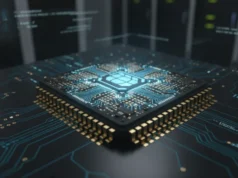
To combat threats that easily bypass operating system sandboxes, 2026 mobile chipsets have integrated next-generation Hardware Security Modules (HSMs). These dedicated, physically isolated coprocessors—evolving from early iterations like Apple’s Secure Enclave and Google’s Titan M2—are designed to assume the primary operating system is already compromised.
Hardware-enforced memory isolation
Modern mobile HSMs utilize advanced hardware capabilities such as Memory Tagging Extension (MTE) and Pointer Authentication (PAC) at the silicon level. In 2026, even if a zero-click exploit triggers a buffer overflow in a media-parsing library, the HSM instantly detects the memory mismatch. Because the memory space is cryptographically tagged, the processor terminates the thread immediately before any malicious payload can execute or escalate privileges. This effectively neutralizes zero-clicks at the physical layer.
Cryptographic attestation for SDKs and 5G slices
To mitigate the risk of malicious SDKs, 2026 HSMs perform continuous runtime cryptographic attestation. Every application and third-party library must verify its integrity against cryptographic keys stored securely within the HSM. If an SDK attempts to execute unauthorized system calls or modify its memory footprint dynamically, the HSM revokes its execution permissions.
Securing 5G network slicing security
As cellular networks transition fully to standalone 5G, network slicing allows carriers to partition physical network infrastructure into virtual, isolated logical networks. 2026 HSMs play a critical role in 5G network slicing security by anchoring slice-specific cryptographic credentials directly inside the hardware. This prevents attackers from executing SIM swapping attacks, as the cellular network requires hardware-bound cryptographic handshakes that cannot be replicated on a cloned SIM card or a rogue software-defined radio.
As mobile threats grow more sophisticated, relying solely on operating system patches is no longer sufficient. Protecting sensitive enterprise and personal data requires a holistic approach that leverages hardware-level isolation, continuous cryptographic attestation, and robust network slice verification. To safeguard your digital assets, ensure your organization’s device procurement policies prioritize smartphones equipped with dedicated, next-generation mobile HSMs and hardware-enforced memory protection.